
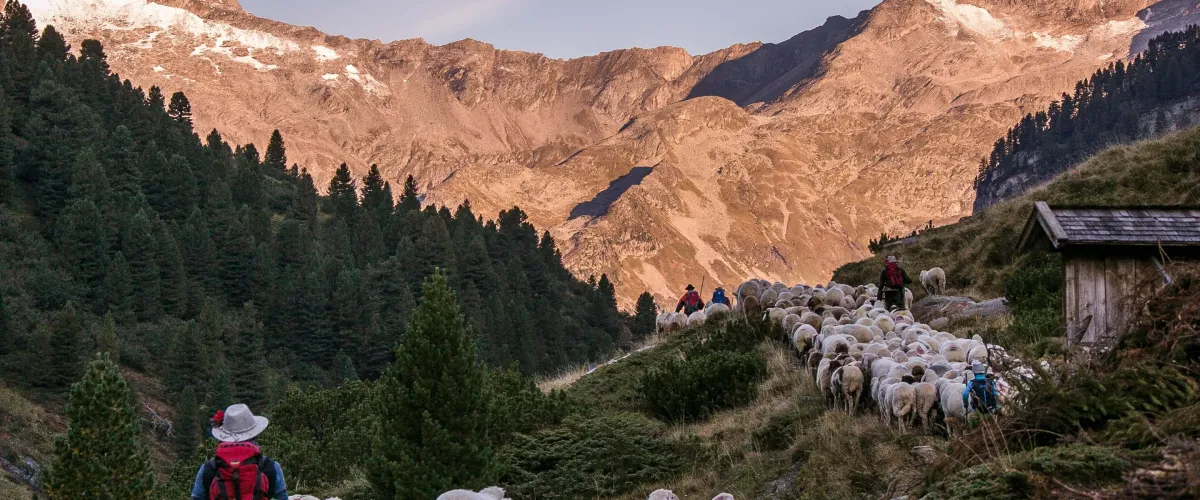
The Berlin High Trail is not a hiking trail in the classic sense. Those planning this route are generally not looking for a leisurely stroll across alpine meadows, but rather the rugged and unspoiled experience of the Zillertal Alps. The Berlin High Trail is a tour that demands physical endurance and mental fortitude, and requires a good understanding of high-altitude terrain. The Berlin High Trail cuts through the summit regions of the Zillertal, it's like a scalpel, encompassing a series of challenging sections, steep slopes, and a constant interplay between valleys and ridges. We take you behind the scenes of this alpine challenge and show you how to prepare for this circular hiking trail.
The Berlin High Trail: Why it's more than just a hike
Those setting off from Mayrhofen usually only see the green slopes of the lower Zillertal valley. However, venturing deep into the area between Finkenberg, the Tux main ridge, and the glaciated peaks of the Hochfeiler, one quickly realizes that nature here plays by its own rules. The Berlin High Trail demands the utmost discipline from every mountaineer and hiker, as it leaves the realm of tourist infrastructure and leads into a high mountain massif, it's unforgiving. The landscape up here is archaic and – one might say – almost forbidding. You encounter granite, ice, and a silence that has become rare in our hectic everyday lives, a silence that not only soothes but also challenges you. Up here, you reduce yourself to the essentials: your pack, your own rhythm, and the next step. The difficulty of the tour doesn't just stem from the altitude or the length of the stages, but rather from the interplay of the unpredictable weather, which can change from sunshine to fog within minutes, and the mental requirement to remain constantly alert in rugged terrain.
Up here, far from the well-trodden tourist trails, every step is a conscious decision. The Berlin High Trail isn't a hut-to-hut hike for someone who just wants to go for a stroll, but a challenging route for experienced hikers and mountaineers who want to test themselves against the ruggedness of the Zillertal Alps. It offers a hike where your alpine experience and assessment of your fitness are the only assets you can rely on in an emergency.
The physical foundation: Why "good fitness" is an understatement
Anyone who thinks that a solid level of fitness for a Sunday outing is sufficient for the stages of the Berlin High Trail is massively underestimating the reality of this tour. In the high mountains, fitness doesn't mean being able to cover a flat distance, but rather the ability to remain focused for days on end under high physical and mental strain. Each day's stage challenges your body anew: You start in the morning with the ascent into the thinning air, tackle challenging mountain passes, and in the afternoon face a long, energy-sapping descent where your knees burn under the weight of your backpack and the constant impact.
Preparation should therefore go far beyond typical endurance training and instead focus on conditioning the body to the stress patterns of the Berlin High Trail. Ideally, a training plan should simulate the ascent with heavy luggage under realistic conditions. In your training area, find climbs that require 800 to 1,000 meters of elevation gain in one go and accustom your muscles to the exact same weight you will later carry on the mountain. This involves more than just the sheer weight.Strength enduranceCrucial, but also coordination skills, as the terrain of the Berlin High Trail is often rocky and unstable, demanding precise footwork. Therefore, train specifically on rough terrain to stabilize your foot muscles and automate your sure-footedness to such an extent that it remains reliable even after eight hours of walking. Because that's precisely when the risk of twisting an ankle or losing your footing increases.
Furthermore, a head for heights is essential. Many sections are exposed and lead through steep slopes where a single moment of inattention can have fatal consequences. Panicking here can endanger not only yourself but the entire rope team. Therefore, test your limits in similar exposed terrain before venturing into the Zillertal Alps. Your preparation for the Berlin High Trail is not just a matter of physical fitness, but a responsible act of self-assessment that ensures you can enjoy the tour under your own power and with full focus, instead of feeling pressured from the very first minute.
Equipment and safety: Consider the worst-case scenario
In the high mountains, your equipment is your lifeline, because the weather in the Alps can change drastically before you can even say "summit assault." A sunny morning can...in aThe afternoon will bring hail showers, snow, or fog, making navigation impossible.
What really belongs in your backpack:
- Navigation: Never rely solely on digital aids. If your GPS battery runs out in cold weather...giving up an analog map is your salvation.
- First aid: Your first-aid kit should contain more than just plasters. You're on your own out here, which is why a bivouac sack and an emergency blanket are absolutely essential for a hike of this kind.
- Footwear: Your hiking boots must be crampon-compatible or very torsionally rigid. The terrain doesn't tolerate soft soles.
- Hiking poles: They're not just for seniors.RelegationsThe steps along the Berlin High Trail relieve your joints and save you from premature exhaustion.
Hut-to-hut hiking in the Zillertal Alps: Strategy and route planning
The Berlin High Trail is an undertaking that requires very careful planning. The classic route is divided into eight stages that lead you through the heart of the Zillertal Alps. However, the planning begins long before the first step, as each mountain hut must be firmly anchored in your schedule as a fixed base.
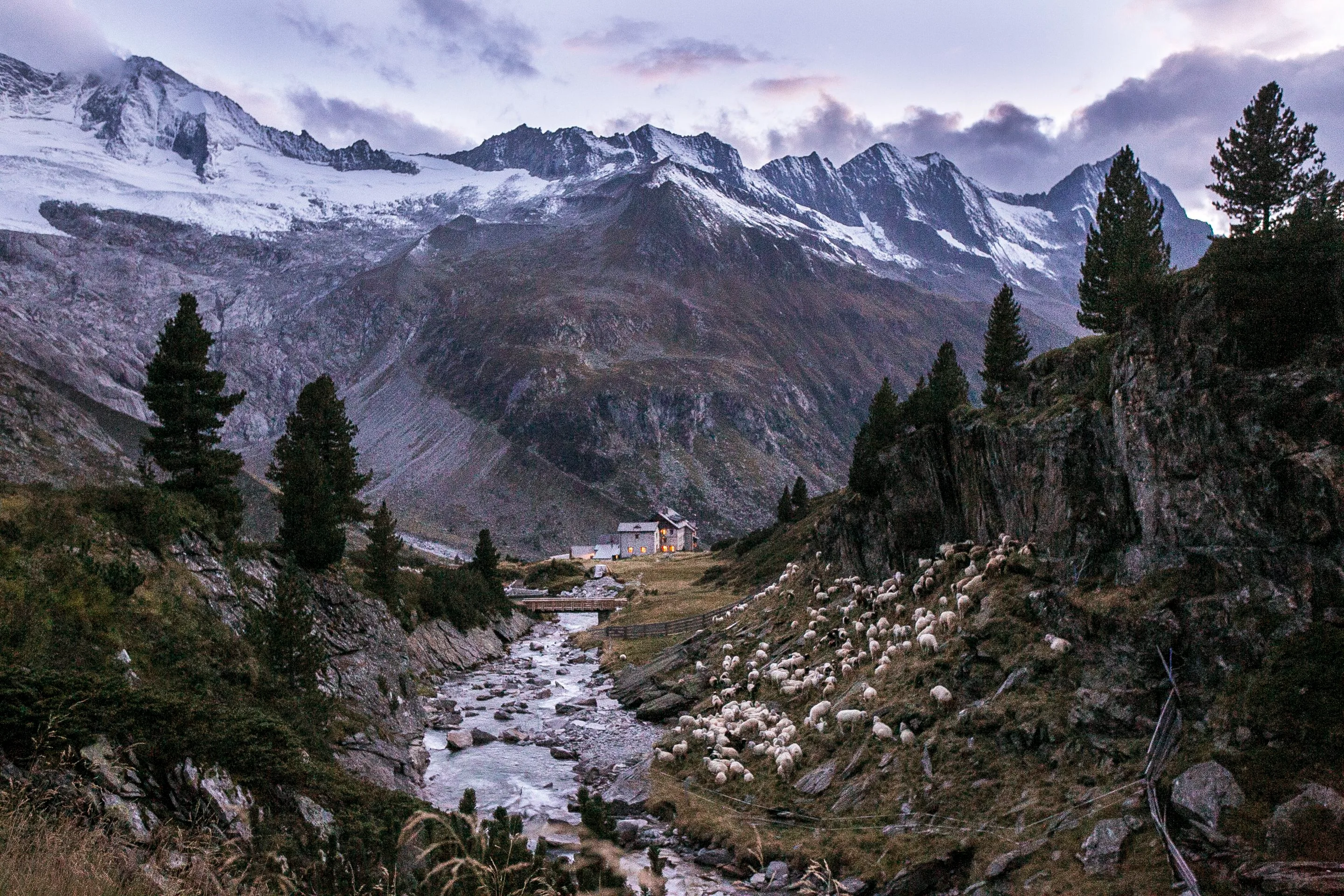
The Gamshütte (1,921 m) usually marks the start of the hike, providing access to the high alpine world. The Berliner Hütte (stage 6) then serves as your high-altitude base camp. It is both a historical and architectural gem and a logistical hub. It is often the bottleneck where planning is determined, as capacity is limited and the crossing to the Schönbichler Horn is one of the most technically demanding sections of the entire route.
To successfully complete the Berlin High Trail, you should plan not only for the kilometers, but also for safety:
- Build in buffer times: The hiking time given in a guidebook is a guideline for optimal conditions. In high mountain regions, old snowfields (even in midsummer!), technical rocky terrain, or sheer exhaustion can halve your pace.
- The daily "cabin check": Your most important companion is communication with the hut wardens. Don't just ask them about the weather, but also about the current condition of the trails. They'll know whether the key sections are safe or whether you should avoid them due to fog or other factors.Fresh snowYou should choose an alternative route.
Know your exit options: The Berlin High Trail, due to its structure, offers frequent opportunities to descend into the valley in case of a sudden change in weather, for example towards Mayrhofen, Finkenberg, or the Tux Valley. Keep these emergency exits in mind before each stage.

The Alpenhof as a strategic “base camp”
Why is the Alpenhof Hotel Garni Suprême in Zell am Ziller the ideal starting point for you ? Because as a family-run establishment, we know exactly what mountaineers need before and after such a demanding undertaking. We see ourselves not just as a place to stay, but asyourBase camp.Zell am Ziller is the strategic hub of the Zillertal valley. From here, you can reach the starting points for the Berlin High Trail quickly and easily. Before you leave civilization behind, you'll find the perfect starting point for the Berlin High Trail.High mountains exchangeAre you placing an order with our extensive breakfast the foundation for your day's journey. In the tranquility of our modern and perfectly equipped rooms you can finalize your planning, configure your GPS, and sort your equipment one last time. And when you descend into the valley with tired legs after days in the rugged wilderness.you return is the AlpenhofThe place where you transform exhaustion into pure relaxation. In our Wellness area your muscles will find the necessary recovery to process the exertions of the last stages. With us, you combine the sporting challenge of an alpine adventure with the comfort and warm atmosphere of a family-run hotel. We offer the infrastructure you need to clear your head and relax.
Frequently Asked Questions
How technically difficult is the Berlin High Trail?
The Berlin High Trail is not a via ferrata, but it's not a walk in the park either. The difficulty lies in the constant ups and downs in alpine terrain. You must be able to navigate safely inpathlessMoving across boulder fields. Surefootedness is absolutely essential in the exposed sections.
What should you do if the weather changes?
The Zillertal Alps are not without risk during thunderstorms. If the weather deteriorates, the safest option is often to descend into the valley. Each stage of the Berlin High Trail offers opportunities to descend into the valleys (to Mayrhofen, Finkenberg, or into the surrounding area) via marked paths.Tuxertal)to descend.
Do I need experience walking on glaciers for the Berlin High Trail?
The path itself does not lead viacrevice-richThere are glaciers, but you'll be constantly moving in high alpine terrain. This means you need to be familiar with alpine hazards. If you've never been at high altitude before, we recommend preparing yourself for the specific challenges of the route through targeted training.
Are hiking poles necessary?
Definitely. With 1,000 to 1,500 meters of descent per day, your knees will thank you for any relief. Hiking poles also offer significantly more stability and balance on muddy or slippery trails after rain.
How far in advance do I need to book the huts for the Berlin High Trail?
Since the Berlin High Trail is one of the most popular high-alpine routes and hut capacity is very limited, you should make your reservation as early as possible, ideally as soon as the huts open their booking windows for the season. Showing up spontaneously without a reservation is not recommended in the high mountains, as you might not get a place to sleep.